Posted on

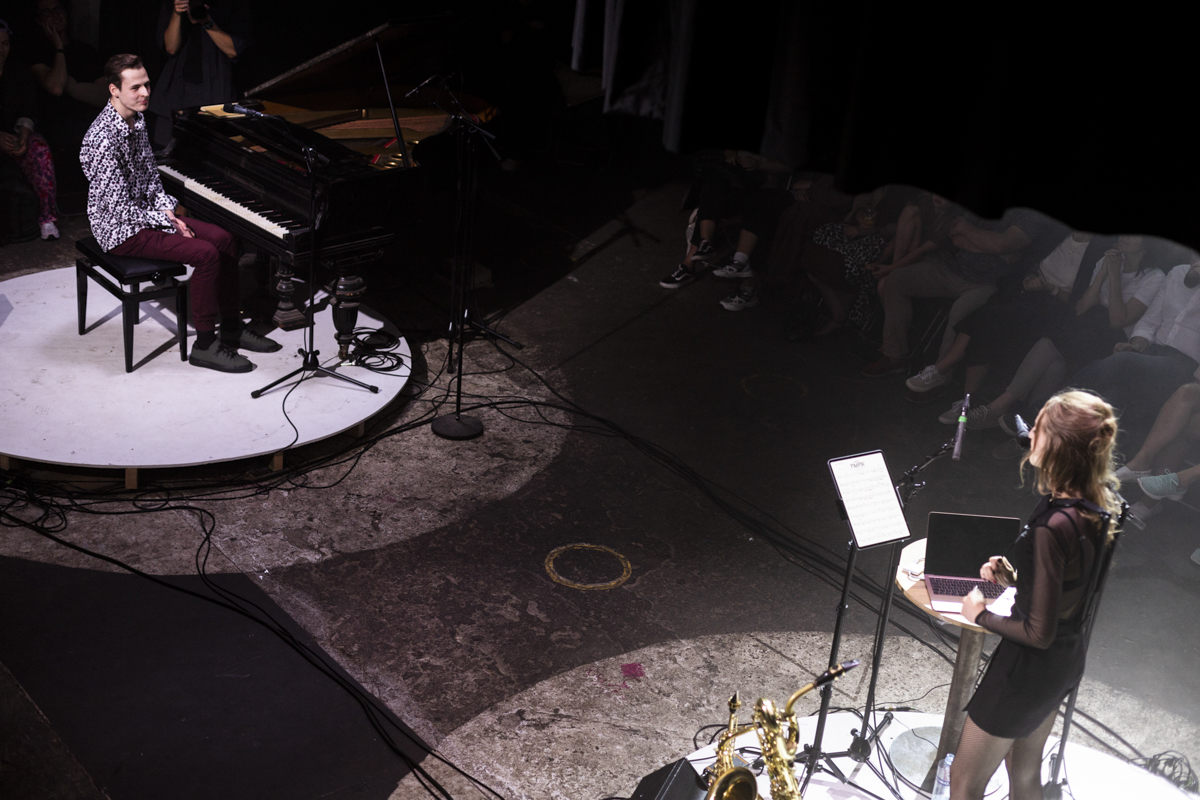
The musician fights

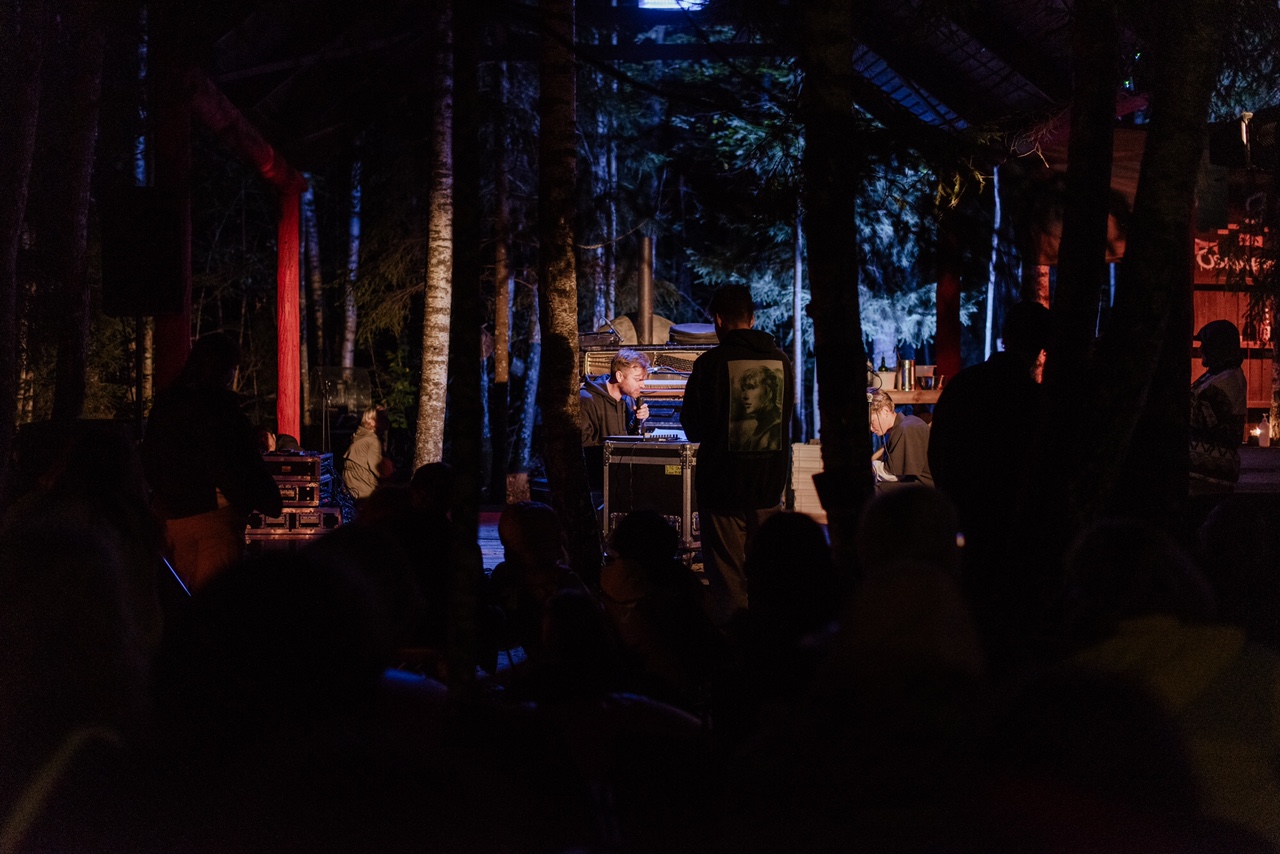
The musician fights began at the Sansusī festival in 2015, then gradually started “coming out” beyond the festival as part of the evenings organized by Sansusī. In 2022, however, a fighting tournament took place! The fights gained new “rules” and a much more vivid dynamic.

This unique format, where musicians alternately “battle” each other, allows them to do so alone or with a support team. During breaks, poetry readings take place, and avant-garde performances of academic chamber music enrich the cultural offering, granting participants absolute freedom of expression. Each battle usually lasts up to an hour.

Visitors are provided with unprecedented experiences of musical instrument sounds, alongside surprises brought by the artists’ personas or created atmospheres. The Sansusī musician battle format stipulates that the instrument played by the musician is not of crucial importance, as professional musicians are selected during the competition, and the main requirement is to “compete” in attractiveness, musical wit, and verbal sharpness. This format promotes the growth of professional musicians, fosters creativity, and enhances public performance skills in atypical performance settings.

The winner of each battle is determined by five votes – a jury represented by two arts professionals, one randomly selected audience member before each pair, the Sansusī team, and the audience’s vote at the end of the battle.

The battles have their own regulations. To apply for a battle, a call is announced, requiring participants to submit a video application and description, after which they can check its compliance with the battle format. Pair variations for the battles will be created based on the recommendations of the artistic director, Armanda Siliņa-Bergmanis, to form the most interesting and harmonious combinations of participants.

The Sansusī team, while organizing battle tournaments, examines each time its strengths and weaknesses to make it appealing to more musicians and showcase their professional skills and personal charisma, as well as attract an ever-growing audience.

The Sansusī musician battles and tournaments are a unique phenomenon in the landscape of Latvian performing arts. Sansusī also ensures the preservation of good practices – the battles are documented in high quality (video, photo, audio), which is later used for creating and preserving concert video content for the future.

Posted on

Strange people stand very strangely

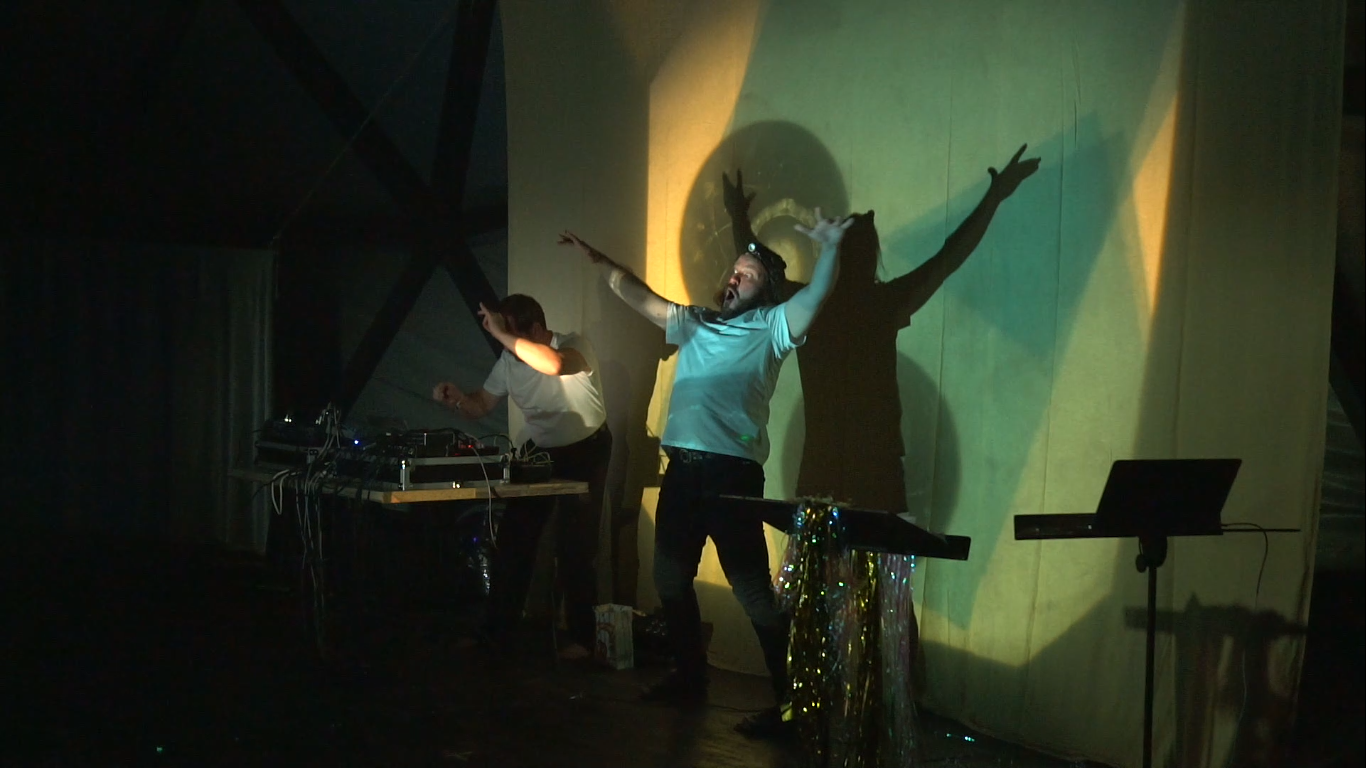
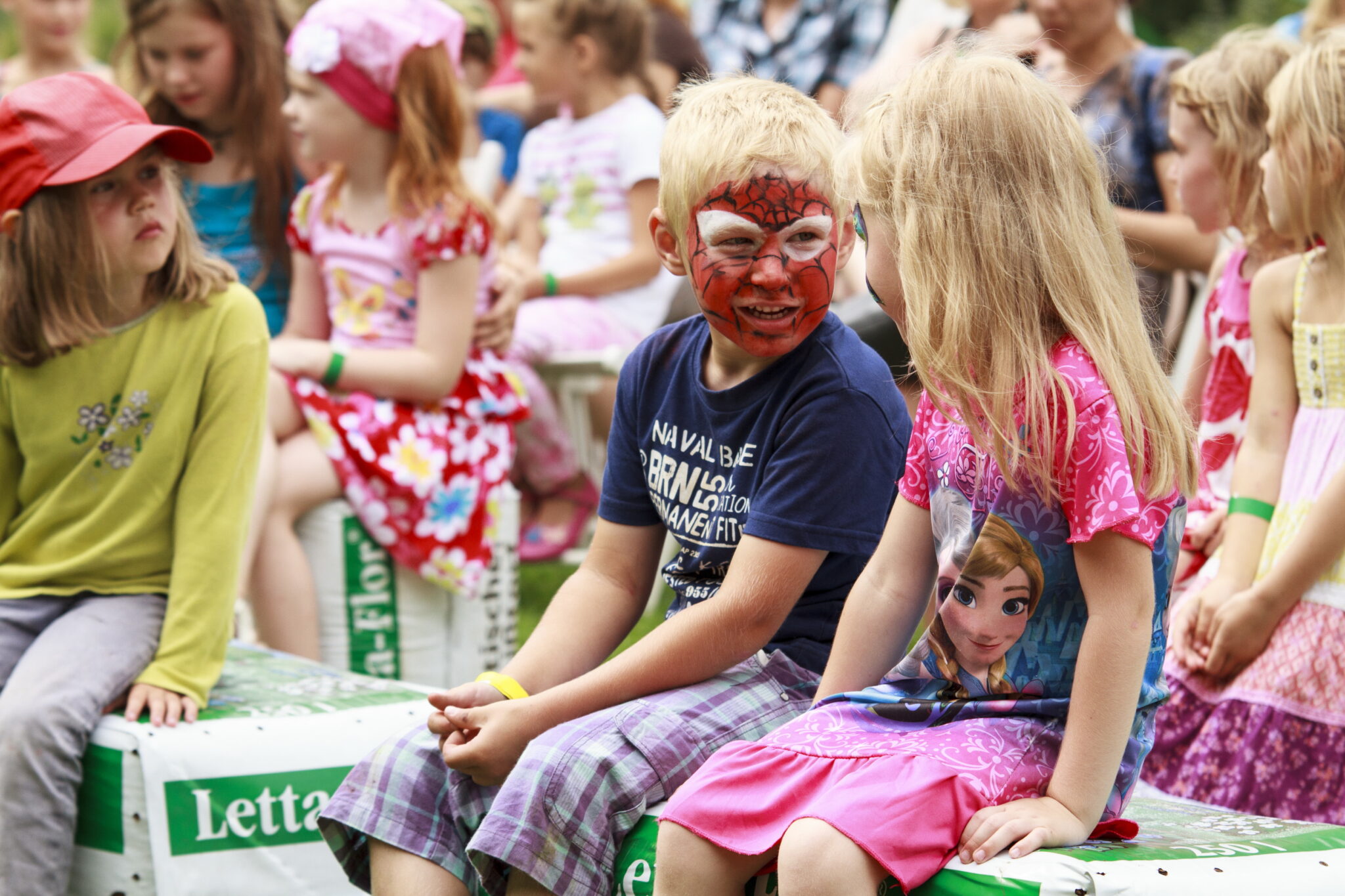
“Strange people stand very strangely” is a vibrant concert-show format performance designed for children, combining analog synthesizers with opera vocals and analog film projectors. At its core is Platon Buravick’s vocal cycle for baritone and analog synthesizers, composed with Daniil Harms’ poetry for children (translated by Kārlis Vērdiņš). The performance incorporates various contemporary composition techniques, which, combined with dance music rhythms, allow the audience to enjoy the charm of contemporary electronic music in an informal manner, while the projections of analog projectors serve as a reference to the light and video effects used in concert shows.

At the same time, abstract projections and “in camera” tricks ignite the imagination of the audience and introduce them to the simplest filmmaking techniques of the early cinema era. The performance features singer Armands Siliņš, composer and analog synthesizer operator Platons Buravickis, analog film projector operator Lāsma Bērtule, director and actor Klāvs Mellis, and choreographer Madara Luīze Muzikante. Lighting designer Niks Cipruss. Cinematographer Elīna Matvejeva.

Image Slide 1
previous arrowprevious arrow
next arrownext arrow
Shadow
Posted on

Men’s songs

Texts by Latvian male poets – Kārlis Vērdiņš, Māris Ruks, Imants Tilbergs, Aivars Eipurs, Krišjānis Zeļģis, Žebers, Pēteris Ķikuts, Jānis Rokpelnis, Ingus Bērziņš, Ģirts Koknevičs – and music by a male composer, Andris Dzenītis. The musical enchantments of two men – Armands Siliņš and Aldis Liepiņš.

About cars and alcohol, but also about self-help literature, Rainis’s daily life, indecent thoughts and feelings, about the moment when a woman announces something important, and about how, in truth, we men are fragile souls. At last, we can speak on equal terms with the women’s press about “how we guys feel.”

As one of the poet’s texts says – still, “Two against one in favor of the woman in this world”! And so, in the intermezzo of the cycle “Dagda Parallels,” the wonderful Ieva Parša joins the men.

/Andris Dzenītis

Posted on

“Dzīves iespējas.” Contemporary chamber music concert.

In Latvia’s concert scene, vocal chamber music is heard relatively rarely, and examples of contemporary vocal chamber music are even rarer. Therefore, every new work and new program in this genre is an event worthy of celebration. Sansusī will offer a new contemporary music program created by composer Platons Buravickis, opera soloist Armands Siliņš, and pianist Ēvalds Lazarevičs, who works in contemporary music and performance art. The concert’s conceptual visual design will be created by audiovisual and digital media artist Jurģis Peters and lighting artist Niks Cipruss.

Concert programme:
P. Buravickis – vocal cycle “Life Possibilities” (“Dzīves iespējas”)
R. Beaudoin – three parts from “Étude d’un prélude”
R. Beaudoin – “Wehmut”
G. Šmite – “Three Songs by William Shakespeare”

The concert focuses on new vocal cycles by Platons Buravickis and Gundega Šmite, complemented by chamber music from the American conceptualist Richard Beaudoin. Both vocal cycles were written specifically for these performers. Before the concert, musicologist Dāvis Eņģelis will give an introduction to the program.

P. Buravickis on his cycle: “I set out to write a three-song cycle titled ‘Life Possibilities,’ in which I wanted to address the issue of how different people live on Earth, what opportunities they have, and their interaction with nature. I used texts by the following authors: the American transcendentalist Ralph Waldo Emerson, the contemporary Irish poet and Pulitzer Prize winner Paul Muldoon, and the Russian scientist Vladimir Vernadsky.”

Gundega Šmite’s cycle “Three Songs by William Shakespeare” is a specially arranged version for baritone and piano of her earlier cycle “The Dreams of Summer’s Midnight by William Shakespeare,” originally written for ten musicians. In the Contemporary Chamber Music concert, it was premiered in this new version. Gundega says about her music: “A sultry hour in the very middle of a summer’s midnight brings together the most diverse characters from the great master of poetry’s plays. Seemingly contradictory figures step out of ancient manuscripts, meeting in a vast, carnivalesque swirl, from which only a few—accompanied by the magician Prospero—reach us: the king Claudius and the duke Orsino. And who can say for sure that it is only a fleeting, shimmering dream…?”

Posted on

Sansusi Evenings

Sansusī Evenings are like a one-night branch of the Sansusī Festival — musically high-quality, emotionally rich, and beloved events that can be described as a cultural dessert with four layers. Their unique format brings academic music to life. These are evenings with academic music, circus, poetry, bars, and musician battles, often ending with a 20-minute disco.

So far, Sansusī Evenings have taken place in Rīga, Cēsis, and Valmiera. 

Sansusī Evenings promote the accessibility of contemporary art in the regions of Latvia, especially for various social groups. Their goal is to bring culture closer to regional residents by offering an engaging program with diverse contemporary art events.

Sansusi Evening in Riga I

Its that time of the year. Time for slow, slow remembering of summer. For bonfires and naked trees and bars with contemporary classics and it’s time for curious experiments.

During the evening of 4th of November, 2016, in Zunda Garden there was a chance to hear Raivis Misjuns – “Short Course in double bass play” Oscar Herlin – “String Quartet no. 1 “, Andris Dzenītis -” Men’s songs 2 Workbook “and Anton Safronov -” The Tale of Turnips. ” And two bars were arguing over whose pianist is the best!

The program was performed by: Raivis Misjuns (bass), Aldis Liepiņš (piano), Armands Siliņš-Bergmanis (baritone), quartet “Quadra” – Arvid Zvagulis (violin), Ivar Brinums (violin), Peter Trasuns (viola), Karl Klotins (cello). Poet Agnese Krivade and pianists Martin Zilberts and Richard Plešanovs.

Sansusi Evening in Riga II

For the second time, Sansusī opened a one-night branch in Riga. On May 26, 2017, in “Zunda Dārzs”. With academic music, circus, poetry, bars and pianist fights.

The evening program included
19.00 – Uncorking of both bars
20.00 – Ēriks Kiršfelds with electric cello
21:00 – Jānis Ruņģis with guitar and pedals
22.30 – Grete Gross (Estonia) with the contemporary circus show “Confines” (participating Ēriks Kiršfelds (cello), Ventis Zilberts (piano), and Ance Strazda (voice)
23.30 – “Pianist Fights in Bars” with the feisty Agnese Egliņa and Liene Circene. Between rounds, the unstoppable poet Leons Briedis.
00.00 – “Twenty Minute Disco” with Dāvis Kaņepe.

Sansusi Evening in Riga III

It was time for us to meet again. For us to talk and see and be silent and think. On May 26, 2017, it was time for the third Evening in Riga, on Krūmiņsala.

The evening’s plan is as follows:
19:00 – Uncorking of both bars (and dishes from “Therapy”)
20:00 – Concert “XXI” with Eni Nael (harpsichord), Guntis Kuzma (clarinet), Nadīne Zapacka (flute), Guntars Freibergs (percussion) and Ēriks Kiršfelds (cello)
21:15 – Return to the festival through a short film by Tom Harjo
21:45 – Dan Le Man’s physical comedy
23:00 – “Pianist Fights in Bars”. Between the rounds, the youngest poet – Valters Dakša.
00:00 – “Twenty Minute Disco” with Platon Buravitski.

Sansusi Evening in Riga IV

On April 27, 2018, it took place in the Tallinna Street block, in a hangar that we created as a branch of Sansusī in Riga for concerts, performances, and other contemporary art forms, which we called “Tu jau zini Kur!”

The evening program was as follows:
19.00 – Uncorking of both bars (and dishes from “Therapy”)
20.00 – Solo concert – Jan Jakub Monowid (countertenor Poland) with Beata Szebesczyk at the piano
21.30 – Object theater. “Strange death and perfect bodies” (performance in progress). Archaeologists of the future, who form relationships with contemporary objects. Mentor – Davide Giovanzana
22.30 – Return to the exhibition/performance “Dark Night of the Soul” by Atis Jākabsons and Anna Fišere (Cherry) through a short film by Tom Harjo.
23.00 – “Pianist Fights in Bars”. With Agnese Egliņa and Rihards Plešanovs.
00.30 – “Twenty Minute Disco” with Platon Buravitski.

Sansusi Evening in Riga V

The fifth and final Sansusī Evening in Riga, on May 25, 2025, in the small, crazy concert hall “Tu jau zini Kur!” in the Tallinna Street quarter.

19:00 Bar Uncorking
20:00 Concert – Lea Trommenschläger (soprano, France) and Matīss Čudars (guitar)
21:45 Contemporary Dance – performance Ranunculus – Daniella Eriksson (dancer, Sweden)
22:45 Pianist Fight – Platons Buravickis (piano), Ēvalds Lazarēvičs (piano), in the interlude Grēte Gross (poetry)
0:15 20-minute disco – at the buttons Toms Auniņš

Sansusi Evening in Riga VI

May 17, 2019. “Tu jau zini Kur!”, in the Tallinna Street quarter. With a classic solo concert for a coloratura soprano (Olga Pudova, pianist Jana Zubova), with a structured butoh improvisational performance (Simona Orinska, Arvis Kantiševs, Andrejs Krūmiņš), with the most aggressive of musicians – a fistfight (Elīna Endzele, Elvijs Endelis), poetry (Laura Elcere), with the immortal 20-minute disco (Rolands Kronlaks).

Sansusi Evening in Cēsis I

Image Slide 1
previous arrowprevious arrow
next arrownext arrow
Shadow

On the evening of July 11, 2020, the creative team of Sansusī invited the residents of Cēsis and its guests to take part in a creative provocation — or, in other words, to enjoy a cultural dessert in four layers — at the event “Evening in Cēsis,” held in the courtyard of the Rucka Residency Centre.

The official part of the evening began at 6:00 p.m., according to “Sansusī time,” with a harpsichord concert by Ieva Saliete, combining Baroque and contemporary compositions. The evening continued with the contemporary dance performance “Labrys” by Krišjānis Sants and Ieva Gaurilčikaite, which gives the deceptive impression of being logically organized, yet one can quickly get lost within it.

For a fuller emotional experience, the third course of the dessert featured a musician battle between pianists — the wild Ēvalds Lazarevičs and the charming duel champion Agnese Egliņa. And then, to absorb all that had been experienced, came some jumping around — the traditional Sansusī 20-minute disco, with music provided by DJ Platons Buravickis.

The project was co-financed by the Vidzeme Planning Region within the Vidzeme Cultural Program, supported by Latvijas Valsts Meži and the State Culture Capital Foundation.

Sansusi Evening in Riga VII

The musical evening was opened by a concert by the piano quartet Quadra and violinist Konstantinas Paturskis at 6:30 p.m. This was followed by a contemporary dance performance by Lithuanian choreographer Vilma Pitrinaite “It’s not your dream”, followed by Jānis Pelše and Aigars Reinis “Ērģeļkautiņš” at 10:00 p.m. The evening was concluded by a 20-minute green ballad with a medley from the repertoire of the “Brāļu miltus pūtēju” band.

Sansusi Evening in Cēsis II

July 31, 2021, at the Rucka Art Residency Center.

At that time, the following dessert courses were held:
17.00 Bar uncorking
19.00 Artists’ Association “Grafienes” performance “Creation”
20.30 Concert by Aigars Reinis (organ) and Aigars Raumanis (saxophone) with compositions by Filips Glas
22.00 “Battle” of trained vocal cords (opera songs by Armands Silis and Kalvis Kalniņš). There will also be a poet.
23.30 20-minute disco
The concert was created in collaboration with the Cēsis municipality and the Vidzeme culture program.

Sansusi Evening in Riga VIII

Image Slide 2
previous arrowprevious arrow
next arrownext arrow
Shadow

Sansusī Evening in Riga VIII took place on June 10, 2022, on the uninhabited Krūmiņsala island in the lower reaches of the Daugava River near the border of Riga. Already from 6:00 p.m., rafters were waiting for guests to be transferred to the wild island, where they would experience four genre-specific parts until midnight.

At the beginning of the evening, one of Latvia’s most energetic and active pianists, Agnese Egliņa, performed a solo program of contemporary piano music, performing George Lewis’s Blombos Workshop, created in 2020.

Guests from Sweden – the contemporary circus troupe “ENT” – presented their performance “Aeldre” (“Elder”): a poetic story expressed in the language of music and movement, a performance of a sense of place for a large tree. The performance is intended for all ages, and the artists emphasize that they see the performance as a place for different generations to come together.

In the third part, “Analog synthesizer battle” – two masters of analog synthesizer playing – Platons Buravickis and Kaspars Rolšteins – competed in musical skill and wit. During the break in the fight, a reading from the poet’s mouth.

At the end of the evening at Sansusī, visitors had the opportunity to use their accumulated creative energy and put it to use in a 20-minute green ball. Otherwise, it is a disco, but considering the location of the event close to nature, the organizers decided to let the guests of Sansusī dance to the music of wind instruments, this time waltzing and foxtroting.

Sansusi Evening in Valmiera

September 16, 2023, in the territory of the Valmiera Water Biological Wastewater Treatment Plant (Grīšļu Street 6).

As usual, the event was held in three rounds with a cherry on top.

At the beginning of the evening, opera singer and founder of the Sansusī festival Armands Siliņš-Bergmanis, together with percussionist Reinis Tomiņš, performed a chamber music program centered on Andris Dzenītis’ cycle “Mēra dziesmas” (2022) and Alise Rancāne’s “Lauka galā” (premiere).

In the middle of the evening, there was a tense semi-final of the Sansusī musicians’ fighting tournament.

The evening concludes with a questioning and exploration of physical balance in the performance “Fineline” (https://www.lumocompany.com/fineline) by the Finnish contemporary circus troupe “Lumo company”, which also features Latvian pianist Ēvalds Lazarevičs.

The evening’s highlight – a 20-minute disco to release energy

Sansusī evening in Valmiera was created with the support of the State Culture Capital Foundation, Dynamic City and Valmiera Municipality

Sansusi Evening in Riga IX

On November 25, 2023, the evening at Sansusī was more special

with Grēte Gross (EE) contemporary circus performance “Kehakõne”, which balances between ceremony and performance, allowing the audience to connect with the artist both physically and spiritually, as well as at times experience contemporary circus from unusual perspectives.

with the chamber music concert “Ziemas epizode”, in which it was possible to hear some of Latvia’s most attractive, musically transcending ensembles – Tresensus and Quadra. The program was supplemented by less frequently seen, but no less interesting academic music duets, making the “Ziemas epizode” program kaleidoscopic. This was also a great opportunity to capture yourself in a frame of the Sansusī “Ziemas epizode” 2023, as the concert was filmed and a New Year’s Eve video episode was created from it.

with The Fight, which was given to a spoken text – actors – this evening, with some musical interludes.

with a 20-minute metal discharge – this time there was a special energy discharge through the heaviest of rock music genres.

Posted on

Three songs with poetry by Paul Celan, sung simultaneously. Kristaps Pētersons (2015)

Three songs with poetry by Paul Celan, performed simultaneously for six voices and nine prepared pianos.

I Allerseelen – All Souls’ Day
II Es war Erde in ihnen – There Was Earth in Them
III Ich kann Dich noch sehn – I Can Still See You

Performers:
Ieva Parša – mezzo-soprano
Armands Siliņš – baritone
Juris Žvikovs – 1st piano part in the third song, as well as vocal lines of the 2nd piano part in the first and second songs
Kristaps Pētersons –  the remaining piano parts
Ralfs Šmīdbergs – vocal lines of the 3rd piano part

Poetry can be perceived most precisely when read with the eyes, if nothing disturbs its sound from being received by the inner ear. Usually one is disappointed upon hearing it recited. One is also often disappointed when hearing how poetry is used in song. In general, disappointment is a common outcome. One thing is clear – poetry is a self-sufficient art form that needs nothing added to it. I know all this, and therefore the question naturally arises – how do I dare to use the works of one of the 20th century’s nearly greatest poets? Someone will surely punish me for it. And yet. Once one utters “Ich kann Dich noch sehn,” within the space created by the poetry one can hear both a woman’s and a man’s voice, as well as the piano. From afar, Schubert sounds – as an impossibility. But today both Schubert and Celan are very far from us. They can perhaps only be summoned through 15 channels – 9 pianos and 3 pairs of voices…
At best, I might have been a page-turner for Schubert (and let’s not even talk about Celan). What I am doing now has only one justification – Celan’s art was created in the shadow of a dreadful era, in which the art of Schubert, Schumann, Beethoven, Wagner, in some sick minds and in a sick way, had initiated the thought of Auschwitz. And that, if we abstract away from German culture, unfortunately may prove to be relevant.
/Kristaps Pētersons

Paul Celan (1920–1970) is one of the most notable German poets of the 20th century, laureate of the Georg Büchner Prize.
The thread of Paul Celan’s poetry is not easily grasped; his poetry demands immersion in various symbols and reminiscences, but especially in the author’s use of language. Celan dismantles the boundaries of conventional word meanings, creating his own language in which word and silence, sound and meaning form multilayered systems of relationships. To a reader who once asked how to understand his poetry, Paul Celan is said to have replied: “Read! Keep reading, and understanding will come by itself!”
Questions surrounding his work have preoccupied not only countless literary scholars but also philosophers such as Jacques Derrida, Maurice Blanchot, and Hans-Georg Gadamer, each dedicating a book to its contemplation.
/Jana Vērdiņa

Posted on

Tree Opera. Windthrow. Anna Fišere (2019)

After the Tree Opera at the Sansusī Festival in 2016, the project had another version in Finland, in collaboration with Finnish musicians and the Mustarinda Association (https://mustarinda.fi/en).

Tree Opera. Windthrow. (2019) in Hyrynsalmi, Finland, is a high-quality interart piece that is based on recent scientific research, highlighting the ecological and cultural significance of forests.

The starting point for the contemporary opera piece is the entwined relationship of humans and forests and the conscious and unconscious communication that is based on it. Tree Opera is linked to the protection of valuable old-growth forests in the Kainuu area.

The opera’s libretto is inspired by forester and author Peter Wohlleben’s book The Hidden Life of Trees, in which he asks if the trees are, in fact, social beings. He draws on scientific findings to describe trees’ similarities with humans.

The artistic group behind the opera is formed by internationally acclaimed musicians, composers and visual artists from Latvia and Sweden. The orchestra comes from Latvia. The vocals are performed by eight singers from the Latvian Radio Choir.

Tree Opera wishes to give a voice to trees and forests. That voice will tell its own story, hoping to evoke thoughts in the audience about the complex role of humans and nature, questioning the mindset of people regarding nature and forests. Could the idea of humans being superior to all other species move towards a discourse where we all are only part of the all-encompassing processes of nature?

Composer is Anna Ķirse.

Libretto author by Andris Kalnozols.

Director: Matīss Budovskis.
Musicians: A chamber ensemble from Latvia; Swedish Paetzold contrabass recorder player Anna Petrini; singers from the Grammy Award-winning Latvian Radio Choir.
Conductor: Artūrs Gailis
Costume design: Mareunrols (Mārīte Mastiņa‑Pēterkopa and Rolands Pēterkops)
Artist/visual collaborator: Andris Eglītis.
Architects: Austris Mailītis and Roberta Fišere (in charge of the platform/stage design in the forest)

Supported by the European Agricultural Fund for Rural Development, Rural Development Program 2014-2020

Posted on

Tree Opera (for three voices, percussion instruments, electronics, Anna Fišere, 2016)

https://www.youtube.com/watch?v=BFSWjQO9igY

Tree Opera – a performance in which the main characters, under the direction of Andris Kalnozols, with video projections by Katrīna Neiburga and set design by Andris Eglītis, are trees in three small groves within a three-hectare clear-cut area. Through the voices of Laima Lediņa, Dināra Rudāne, and Zigmārs Grasis, they enter romantic relationships, just like in the Enlightenment-era Swedish natural scientist Carl Linnaeus’s study The Marriage of Trees (1729).

composer Anna Fišere (Ķirse)
text (in Latin) and direction Andris Kalnozols
translation Mārtiņš Laizāns
artists Katrīna Neiburga, Andris Eglītis
lighting designer Mārtiņš Feldmanis
sound engineer Tālis Timrots

coloratura soprano: Dināra Rudāne
soprano: Laima Lediņa
bass: Zigmārs Grasis
percussion: Alekss Jalaņeckis, Juris Āzers, Elvijs Endelis
voice in recording: Māra Ķimele

species and habitat experts–consultants: Maija Grandāne, Viesturs Lārmanis

Premiere on 12.08.2016; Alternative Chamber Music Festival Sansusī, Aknīste

“Praeludia Sponsaliorum Plantarum” or “Introduction to the Theme of the Betrothal of Plants” is a treatise written in 1729 by the famous Swedish natural scientist Carl Linnaeus. Just as Linnaeus drew inspiration for his study from Giorgio Vallis’s work “The Marriage of Trees”, the creative team uses the theme of the sexuality of trees and plants as an imagination-stimulating platform for the musical composition. The relationships between the pine, spruce, and birch in nature are transformed into opera-worthy relationships in contemporary music.

https://fisere.lv/

Posted on

LOKS ( Festival link 2.0)

Unique musical collaboration of four festivals “LOKS” (2024)

A joint work by composers from four countries for four quartets of different instruments, performed in different ways at four festivals in four countries.

The project “Festival Link 2.0” brought together festivals and composers — Finland’s “Silence Festival” and Lauri Supponen, Germany’s “Classic Beat Festival” and Sofia Günst, the Netherlands’ “Bachfestival Dordrecht” and Oene van Geel, and Latvia’s Sansusī festival and Krists Auznieks.
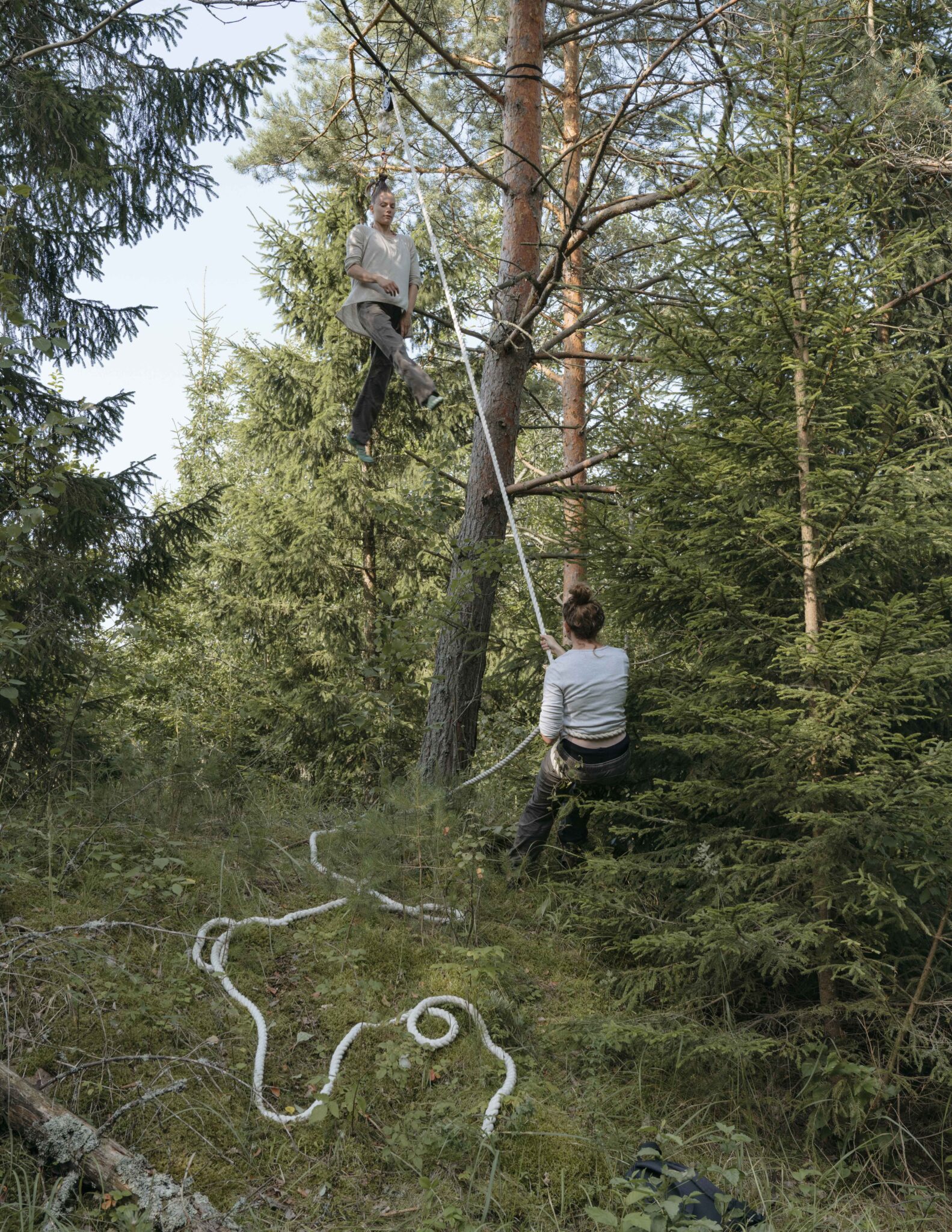
From the uncertainty of sowing seeds to the abundance of harvest, the composition forms an arc — or a circle — across its four performances, encompassing the entire process of vegetation. Each quartet represents an interplay between the imagination of each individual composer and the space created between them. Each quartet is performed separately, yet connected to the other three. Together, all four quartets form a composition for an orchestra of 16 performers, operating simultaneously in one and several places.
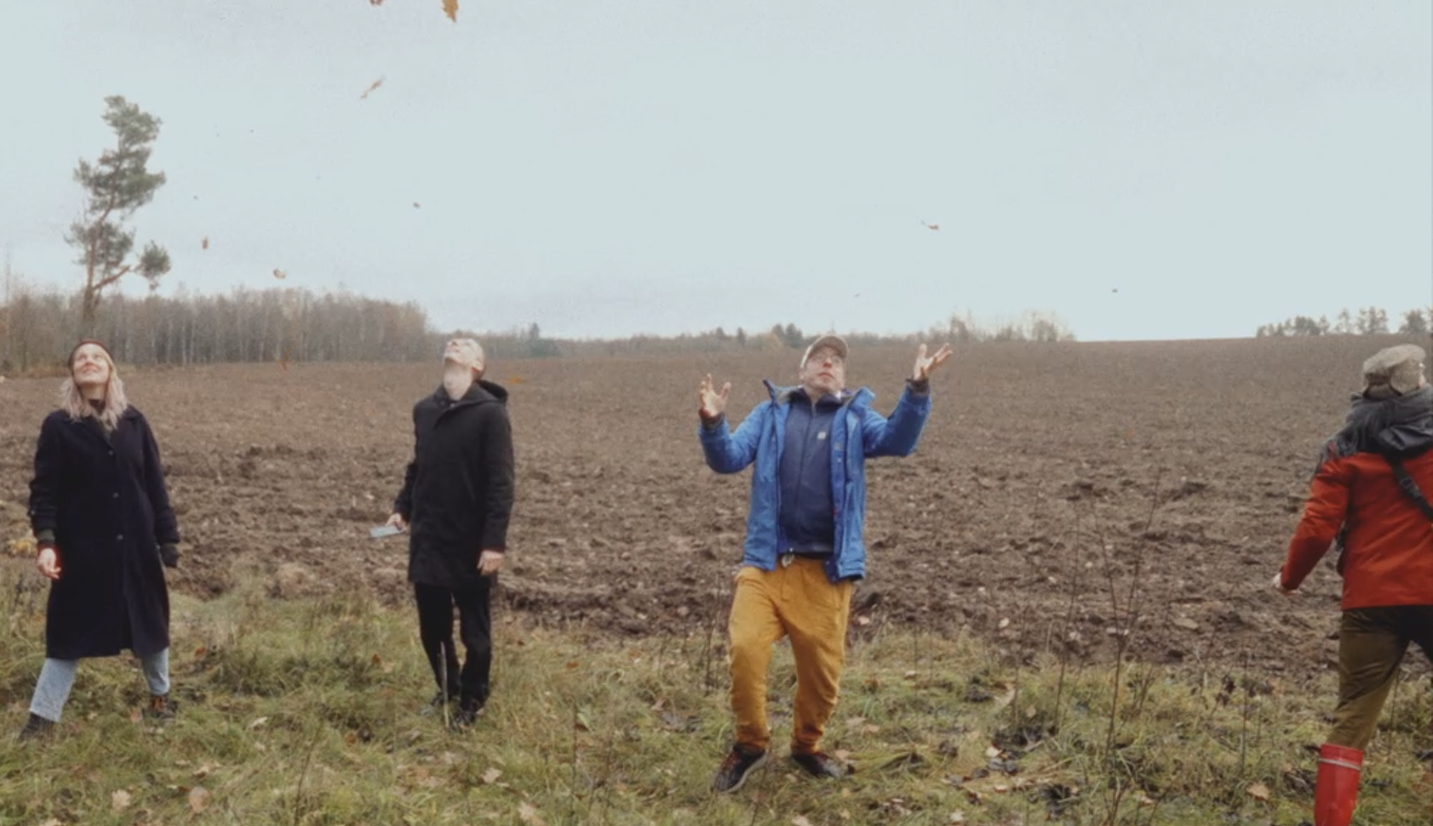
The first quartet version, for violin, viola, cello, and double bass, performed by “Uusinta Ensemble,” took place on June 8 and 9, 2024, in Finland at the “Silence Festival” (https://www.hiljaisuusfestivaali.fi/).

On June 23, 2024, in Dordrecht, the Netherlands, at “Bachfestival Dordrecht” (https://www.bachfestivaldordrecht.nl/), the second version of the work — for flute, oboe, bass clarinet, and bassoon — was performed.

In Germany, at the “Classical Beats” festival (https://www.classicalbeat.de/), the version for electric guitar, drum set, trombone, and electric bass was performed on the evening of July 22, 2024, by musicians from the “Munich Composer Orchestra by Gregor Hübner.”

And the fourth version — for voice, kokle, accordion, and flugelhorn — performed by Daniils Kuzmins, Līga Griķe, Artūrs Noviks, and Kristians Kalva, took place at the Sansusī festival (www.sansusi.lv) on the evening of August 10, 2024.

All four versions were combined and captured in concert film format by director Toms Harjo, creating the fifth version of LOKS — a permanent, composer-created version for all musicians together. The film premiered on November 5, 2024.
Composers: Lauri Supponen, Oene van Geel, Krists Auznieks, Sofia Günst
Musicians: Maria Puusaari, Max Savikangas, Sirja Nironen, Vilhelm Karlsson, María Cristina González, Inge Ariesen, Fie Schouten, Bram van Sambeek, Felix Eilers, Fabian Ernst, Philipp Grabit, Tim Haas, Anna Emmersberger, Oscar Mosquera, Vincent Marian Crusius, Freddy Andrej, Andrew Munn, Līga Griķe, Kristians Kalva, Māris Rozenfelds

Director Toms Harjo: “This has been the most complex editing project I have ever undertaken. My only task: to help the listener not get completely lost in the jungle of sounds. Honestly, I don’t know if I got lost myself. But I’m really happy with the result!”

The project is co-financed by the European Union and the Ministry of Culture of the Republic of Latvia. “Festival Links 2.0” is a European cooperation project in the field of classical music, aimed at promoting greater sustainability for independent classical music festivals in Europe through artistic collaboration, audience research and development, and capacity building.

Supported by

Posted on

Kukainis

In the children’s play Insect, composed by Oļesja Kozlovska and Jēkabs Nīmanis based on Franz Kafka’s story The Metamorphosis, entomologist (insect researcher) Uģis Piterāns takes part alongside Armands Siliņš-Bergmanis, musicians, and actors.

director Anita Sproģe
playwright Justīne Kļava
set designer Austra Hauks
lighting designer Jānis Sniķers
composers Oļesja Kozlovska, Jēkabs Nīmanis

actors Ance Strazda, Klāvs Mellis, Reinis Boters
singer Armands Siliņš-Bergmanis
viola Dāvis Sliecāns
percussion Ernests Mediņš
French horn Ilvis Faulbaums
double bass Ivars Ozols

Gregor is an entirely ordinary boy from an entirely ordinary family, with whom a most extraordinary event has taken place. Convinced that his only mission on Earth is to study well and bring joy to his parents and teacher, Gregor lives in constant fear of not being up to the task. That is why, one fine day, Gregor finds himself in a situation where he can no longer fulfill his usual role.

The play Insect is based on motifs from the story The Metamorphosis by modernist writer Franz Kafka, who was born in what is now the Czech Republic. It tells the story of a typical middle-class family whose child turns into a cockroach overnight. In the roughly hour-long performance, filled with grotesque and absurd events, the audience will see two loving parents trying to live with someone who has become different, as well as a young person’s desire to break free from the constraints of expectations and begin an independent life.

During the performance, musicians play compositions by Oļesja Kozlovska created especially for the show, inspired by the theme of insects from the meadow and the household. There is also a popular science presentation about cockroach habits and behavior, helping the audience to shed stereotypes and see the cockroach as a nice and pleasant creature.

The play Insect is intended for the whole family. For children, it offers the opportunity to follow the coming-of-age story and self-discovery of ten-year-old straight-A student Gregor, while for adults, it provides a chance to recognize themselves in everyday realities of an era obsessed with success and gripped by a panic fear of anything different.