Posted on

Festival link 2.0

The goal of the project Festival Link 2.0 is to strengthen the ability of small and independent organizations to face shared challenges and difficulties through specialist exchanges and access to specialized knowledge. It also aims to promote artistic collaboration and encourage joint creative processes and decision-making by combining individual identities and community initiatives with shared values.

The project “Festival Link 2.0” brought together festivals and composers — Finland’s “Silence Festival” and Lauri Supponen, Germany’s “Classic Beat Festival” and Sofia Günst, the Netherlands’ “Bachfestival Dordrecht” and Oene van Geel, and Latvia’s Sansusī festival and Krists Auznieks.

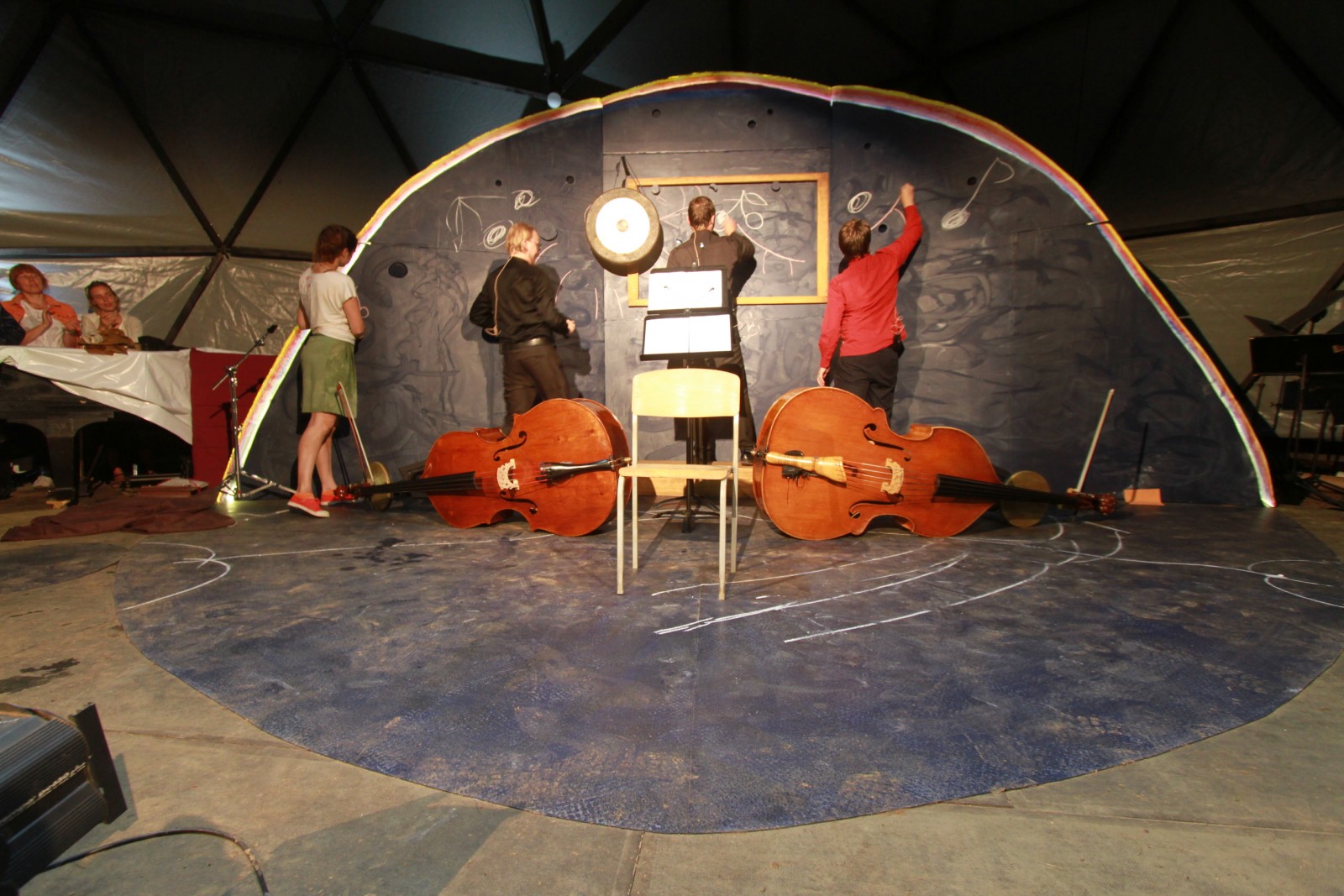
From the uncertainty of sowing seeds to the abundance of harvest, the composition forms an arc — or a circle — across its four performances, encompassing the entire process of vegetation. Each quartet represents an interplay between the imagination of each individual composer and the space created between them. Each quartet is performed separately, yet connected to the other three. Together, all four quartets form a composition for an orchestra of 16 performers, operating simultaneously in one and several places.

The first quartet version, for violin, viola, cello, an

d double bass, performed by “Uusinta Ensemble,” took place on June 8 and 9, 2024, in Finland at the “Silence Festival” (https://www.hiljaisuusfestivaali.fi/).

On June 23, 2024, in Dordrecht, the Netherlands, at “Bachfestival Dordrecht” (https://www.bachfestivaldordrecht.nl/), the second version of the work — for flute, oboe, bass clarinet, and bassoon — was performed.

In Germany, at the “Classical Beats” festival (https://www.classicalbeat.de/), the version for electric guitar, drum set, trombone, and electric bass was performed on the evening of July 22, 2024, by musicians from the “Munich Composer Orchestra by Gregor Hübner.”

And the fourth version — for voice, kokle, accordion, and flugelhorn — performed by Daniils Kuzmins, Līga Griķe, Artūrs Noviks, and Kristians Kalva, took place at the Sansusī festival (www.sansusi.lv) on the evening of August 10, 2024.

All four versions were combined and captured in concert film format by director Toms Harjo, creating the fifth version of LOKS — a permanent, composer-created version for all musicians together. The film premiered on November 5, 2024.

Composers: Lauri Supponen, Oene van Geel, Krists Auznieks, Sofia Günst
Musicians: Maria Puusaari, Max Savikangas, Sirja Nironen, Vilhelm Karlsson, María Cristina González, Inge Ariesen, Fie Schouten, Bram van Sambeek, Felix Eilers, Fabian Ernst, Philipp Grabit, Tim Haas, Anna Emmersberger, Oscar Mosquera, Vincent Marian Crusius, Freddy Andrej, Andrew Munn, Līga Griķe, Kristians Kalva, Māris Rozenfelds

Director Toms Harjo: “This has been the most complex editing project I have ever undertaken. My only task: to help the listener not get completely lost in the jungle of sounds. Honestly, I don’t know if I got lost myself. But I’m really happy with the result!”

The project is co-financed by the European Union and the Ministry of Culture of the Republic of Latvia. “Festival Links 2.0” is a European cooperation project in the field of classical music, aimed at promoting greater sustainability for independent classical music festivals in Europe through artistic collaboration, audience research and development, and capacity building.

Supported by

Posted on

EPICIRQ on tour

EPICIRQ on Tour is a project funded by Creative Europe, exporting the Baltic contemporary circus performances to international audiences by offering them residency and performing opportunities.

EPICIRQ on Tour is organised together with 5 international partners: Lithuania – Menu Spaustuve, Finland – Salo Circus Festival, Denmark – Dynamo Workspace, Latvia – Sansusi Festival, United Kingdom – Jacksons Lane.

The 5 partners chose the main programme of EPICIRQ 2023, then visited EPICIRQ 2023 in October in Tallinn and thereafter made the decision for a performance to be offered a residency and/or performed at their venue/festival.

This year EPICIRQ on Tour is offering support to 3 Baltic collectives:

  • Art for Rainy Days with performance “How a Spiral works” – residencies at Sansusi (FI), Arts Printing House (LT), performance at Jacksons Lane (UK) 
  • Kanta Company “Dear pressure” – residency at Dynamo Workspace (DK)
  • Aleksey Smolov and Lizeth Wolk (Big Wolf Company)  “NOT TO BE MENTIONED” – performance at Salo Festival (FI)

The Baltic contemporary circus presents something new, unique and unexplored.

Through this project, we aim to strengthen the quality and visibility of Baltic contemporary circus locally, regionally and internationally.

We highly believe that the uniqueness of the Baltic circus is something to share with the rest of the world.

​Funded by the European Union. Views and opinions expressed are however those of the author(s) only and do not necessarily reflect those of the European Union or the European Education and Culture Executive Agency (EACEA). Neither the European Union nor EACEA can be held responsible for them.

Posted on

Baltic Contemporary Opera Network (BCON)

Founded in 2024, the Baltic Contemporary Opera Network (BCON) brings together creators, producers, and critics from Lithuania, Latvia, and Estonia to strengthen collaboration in contemporary opera. After initial meetings across the Baltic states, BCON now moves into its next phase: a series of creative residencies from 2025 to 2027, aiming to develop and premiere new works of contemporary music theatre.

The first residency took place on 18–23 August 2025 at the Sansusī residency space in Aknīste, Latvia, following the Sansusī Festival. Artists from all three Baltic countries explored and developed new ideas for possibly creating new operas together.

Upcoming residencies are planned for 2026 in Tallinn and Klaipėda, and in 2027 in Liepāja, with new artists selected each time, but some returning participants may be invited to continue developing earlier concepts.

BCON is led by Operomanija (LT), Sansusī and Ģertrūdes ielas Theatre (LV), and New Opera (EE), with support from Baltic composers’ unions and key cultural institutions, including Klaipėda State Musical Theatre, ECCM, Estonian Music Days, and Lielais Dzintars Concert Hall in Liepāja.

Co-funded by the Nordic-Baltic Mobility Programme for Culture, BCON will conclude in 2027 with the premieres of two new contemporary operas from the Baltic region.

Posted on

Sansusī Creative Residencies

Sansusī Creative Residencies is an interdisciplinary program for artists and creative professionals that promotes the development of contemporary art and culture by offering an environment for creative work, professional growth, and interdisciplinary collaboration. During the residency, artists conduct research, develop new ideas, and create artworks while engaging in discussions and exchanges of ideas with other residents.

At the residency center “Susēja,” artists are provided with a supportive creative process that includes technical and material support, as well as opportunities to interact with the local community. The goal of the residency is to promote cultural decentralization by making contemporary art accessible in regional areas and to ensure an environmentally friendly approach to art creation.

This year, the residency center has hosted 16 different interdisciplinary projects in contemporary performing arts, music, film, and applied arts, supporting a total of 23 artists from various European countries, the United Kingdom, Australia, and China.

Sansusī Residencies provide an environment where artists and the public can interact, creating unique artistic and cultural experiences while promoting sustainability and regional cultural development. It is a place where artists can conduct the necessary research, work on their creative processes and projects, and develop themselves both professionally and personally. A place where new collaboration opportunities can be discovered on local and international levels, offering unique experiences while also enhancing the artists’ own inner well-being.

Supported by
Posted on

Erasmus+ Sansusī Dance training

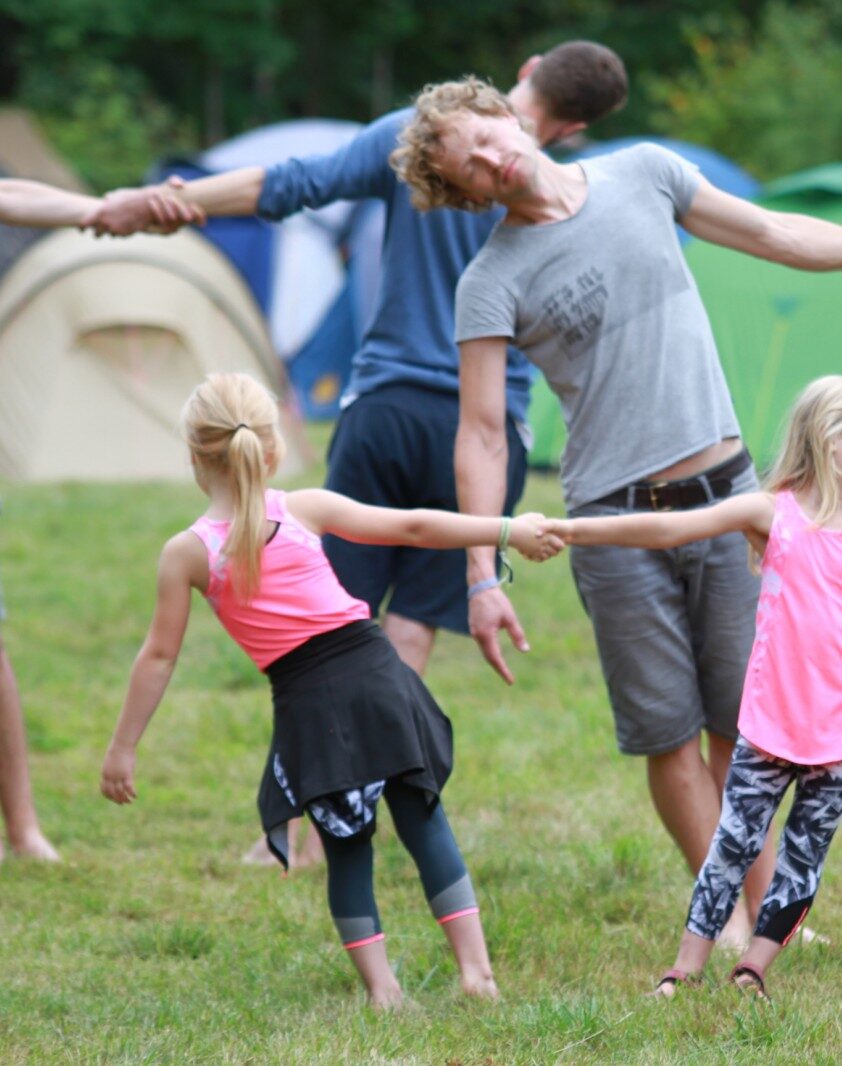
Sansusī Dance Training is an international Erasmus+ project bringing together 31 youth workers from 7 countries for a 9-day training. It uses dance and body movement as tools for inclusive, creative, and empowering youth work. 

Project is financed by European Union through Erasmus+ program. Financing is governed by Jaunatnes Starptautisko Projektu aģentūra in Latvia. Project nr. 2024-1-LV02-KA153-YOU-000233201

Supported by

Posted on

ESC Quality Label and annual grant (SVP projects) (from 2020, KZ until 2027 currently)

Within the framework of European Solidarity Corps-funded voluntary work projects, we host both individual volunteers and volunteer groups from various countries at the Sansusī residency center. Through their volunteer work, young people support the activities of the association, improve the facilities of the residency center and help ensure its operation, assist in organizing the Sansusī Festival, support the local community, and through cultural exchange, creativity, solidarity, and inclusive activities, get to know themselves and others.

Project Sansusī Volunteer 2025–2026

The European Solidarity Corps-funded voluntary work project brought together 16 young people from different countries for five weeks in the summer of 2025 at the Susēja artist residency center.

In 2026, the project will also host individual volunteers, as is being done in the 2024–2026 project.

The project is co-financed by the European Union within the framework of the European Solidarity Corps program. Quality Label Numbers 2022-1-LV02-ESC50-QLA-000112752 and 2020-1-LV02-ESC52-003470. Project No. 2025-1-LV02-ESC51-VTJ-000346775. In Latvia, funding is managed by the Agency for International Youth Programs.

Project Sansusī Volunteer 2024–2025

The European Solidarity Corps-funded voluntary work project brought together 12 young people from various countries for five weeks in the summer of 2024 at the Susēja artist residency center.

From May 2025 to March 2026, we have hosted and plan to host additional individual volunteers from various countries at the Susēja artist residency center. These volunteers will live and work together in a rural cultural environment, developing their personal projects, supporting artists, helping to organize cultural events, and improving community spaces. By March 2026, we will host more volunteers who will work at the residency center and actively engage in the local community.

The project promotes solidarity, creativity, and mutual growth.

The project is co-financed by the European Union within the framework of the European Solidarity Corps program. Quality Label Numbers 2022-1-LV02-ESC50-QLA-000112752 and 2020-1-LV02-ESC52-003470. Project No. 2024-1-LV02-ESC51-VTJ-000224668. In Latvia, funding is managed by the Agency for International Youth Programs.

Supported by

Posted on

Susēja Dome Concerts / Susēja Beautiful Concerts / (Selonia Cultural Program)

The project provides professional music concerts in Selonia, making them accessible to everyone regardless of age, language, or social status. It aims to foster public interest and understanding of academic art development and cultural diversity in the Selonia region. At the same time, the event promotes the decentralization of quality cultural offerings, delivering high-value cultural experiences to the residents of Selonia and contributing to the development of a new regionally significant cultural venue.

On July 27, 2025, a concert by Matīss Čudars, Edvīns Ozols, and Rūdolfs Dankfelds took place in the Susēja Dome. On October 5, the trio of Agnese Egliņa, Elza Siliņa, and Rinalds Rozenlauks performed, while on October 30, a quartet featuring Patrīcija Bloma, Tomass Ančs, Marta Balode and Edvards Paulis Muzikants will perform in the Susēja dome.

Supported by

Posted on

Festival SANSUSĪ 2025

The 12th Sansusī Festival offered the residents of Latvia, especially those from the Aknīste and Sēlija regions, the opportunity to enjoy artistically high-quality, professional, and well-produced art for a whole week — chamber music concerts, theater and circus performances, activities for children, and other events.

 The Sansusī festival promotes the understanding of academic music as an accessible and comprehensible art form, breaking the stereotype of it being an elite art reserved only for select groups of society.

During the festival, mutual tolerance was encouraged and social exclusion was reduced — the festival was enjoyed simultaneously by fans of refined cultural and artistic events, admirers of more informal summer festivals, local residents, patients from the Aknīste Psychoneurological Hospital, and international volunteers. The creatively free atmosphere of the event attracts young people, motivating them to develop their inner potential and fostering interest in art.

Supported by

Posted on

To Sansusī – Under the Skies of Sēlija

“To Sansusī – Under the Skies of Sēlija” is a project supported by the NGO Fund of the Society Integration Foundation, aimed at strengthening the Sansusī association, its community, and the Susēja Arts Residency Center. Within the project, volunteer activities take place in Aknīste and Riga, including creative workshops, three community work days dedicated to improving the residency environment and learning practical skills, as well as upgrading the Sansusī website.

These events are not just about work – they are opportunities to come together, spend time meaningfully, and enjoy a creative and friendly atmosphere. For volunteers, it is a chance to contribute to the development of a center that holds significance for the Latvian cultural community, to meet artists and like-minded people, to learn new skills, and to become part of the warm Sansusī family. The project fosters civic participation in culture and strengthens democratic values, creating an environment where art and people meet, inspire, and enrich one another.

Supported by

Posted on

Salmon song (spring of 2024 – autumn of 2028)

In the project “The Salmon Song,” we will focus on the protection of salmon in Latvian rivers and the reduction of illegal poaching. Through musical and educational events in Kuldīga, we aim to engage and involve the public in addressing this issue. The project consists of three parts: research and prototyping; educational camps with workshops and masterclasses; and concerts featuring works by Latvian and international composers created specifically for the Salmon Song project.
The project is a part of “Liepāja 2027” programme and is supported by the municipalities of Liepāja, Kuldīga District, and Dienvidkurzeme.

Supported by